


Tapatapa ki te Papa
Kelly Kahukiwa | Music
Bay of Plenty Te Moana a Toi
The Project
Tapatapa ki te papa
Whakatangi ki te rangi
Manahua te manawa
Tau mai te mauri e
Hā ki roto hā ki waho
Ihi wehi wanawana
Whēoro, pūoro, ihirangaranga e!
Tēnā koutou katoa.
Ko Ngāti Whakaue, Ngāi Tūhoe, Te Aitanga-a-Māhaki, Kōtirana, Tiamana ōku tūpuna.
Ko Kelly Kahukiwa tōku ingoa.
Warm greetings to all. The rhythms beneath our feet, amplified through the trees, the insects, the birds, the flow of cascading rivers, speak
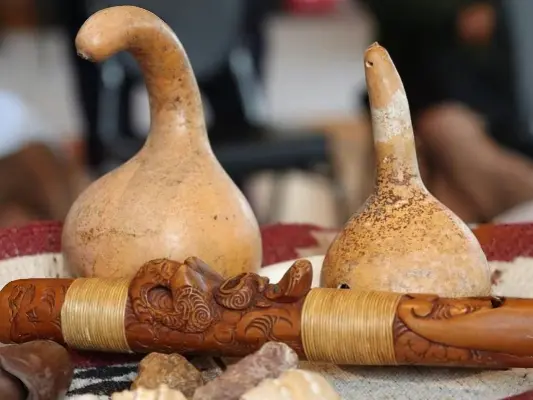
I have worked for many years in rhythm investigation and the role of taonga pūoro (Māori instruments) in te ao Māori. I am a maker, sound artist, cultural practitioner, and father of 3.
I want to leave a taonga for future generations and I am asking for your help.
Tapatapa ki te Papa is a kaupapa grounded in te ao Māori focused on the research and development of a structured pathway for drum-making with rangatahi and kaiako.
For many years, I have explored the idea of a Māori drum language — recognising that while many Pacific cultures hold strong drum traditions, this is an area we are still actively reawakening within our own contexts through taonga pūoro, performing arts, and making practices.
This project is part of that wider collective movement.
This phase is about building foundations — researching drum-making methods, testing materials, identifying suppliers, and working alongside taonga pūoro practitioners to develop a clear, repeatable workshop model.
At its core, the work will:
- test materials and construction methods
- explore recycled native timber and natural skins
- develop accessible building processes
- document a structured wānanga model for rangatahi and kaiako
The outcome is not a single workshop, but a framework that can be shared, taught, and carried forward.
Rangatahi will learn alongside experienced practitioners, creating their own drums and engaging directly with sound, material, and identity.
This is about restoring a pathway where making, rhythm, and cultural expression sit together again — and ensuring this knowledge can be passed on to future generations.
This campaign builds the foundation for that future.
The Team
My team exists of Kelly Kahukiwa, Wiremu Sarich, Christian McDonald, Horomona Horo and artist Mr G - Graham Hoete.
The Funding
This campaign supports the research and development phase of Tapatapa ki te Papa.
Your support will go directly toward:
- purchase initial materials and resources needed to trial drum-making methods
- engage and pay experienced taonga pūoro practitioners, makers, and cultural advisors to share knowledge and guide the development process
- test and refine construction methods, tools, and material pathways
- identify sustainable suppliers and resource options (including recycled native timber and natural skins)
- document learnings to ensure the process is clear, repeatable, and shareable
- develop a structured wānanga model that can be delivered to rangatahi and kaiako
This phase ensures the kaupapa is properly grounded — with expert input, tested materials, and a clear framework before delivery begins.
- researching and testing drum-making methods - focussing on using what already exists if possible, not making an impact on large native trees
- sourcing and trialling materials (traditional tūpuna methods and sustainable modern materials)
- identifying sustainable suppliers and resource pathways.
- working alongside taonga pūoro practitioners and makers
- documenting and developing a clear, structured workshop model
This is about building a strong foundation — so the knowledge doesn’t remain scattered or inaccessible, but becomes something that can be taught, shared, and carried forward.
If we reach our $8,000 goal, it will be matched — doubling the impact of every contribution and enabling this kaupapa to move from research into a fully realised pathway for rangatahi and kaiako.
This is an opportunity to support something at its beginning — helping shape a process that can grow into communities, kura, and marae over time.
This kaupapa is about building a pathway — not selling access to knowledge.
The drum-making process and deeper learning are held within wānanga spaces, where knowledge is shared through participation, not purchase.
Your support helps build that pathway.
Rewards:
As part of this campaign, supporters go into Golden Ticket draws to attend the first Makers Wānanga, OR to win a customised prototype drum OR .
Each draw is limited to its donation tier, meaning:
- the higher your level of support
- the smaller the group you are drawn from
- the stronger your chance of receiving an invitation
At higher tiers, your chances increase — and at the top level, places are guaranteed.
Alongside this, a small number of taonga offerings (such as a raffle for a customised drum or a chance to invest and receive one of two personalised karakia) These are available in limited quantities.
The Details
Tapatapa ki te Papa
Researching, developing, and unpausing this strand of the traditional development of Māori rhythmic language through drum-making pathways for rangatahi and kaiako.
Our tūpuna (ancestors) made some headway on this endeavour - the passage of time and circumstances required some of our cultural development to be put on pause by our tūpuna. They left it for us to carry the flame, but first we are reigniting the dormant embers.
This is a calling to carry on the tradition of our skin drums - carrying on research of the older traditions that members of the team have already embarked on, collaborating with others we meet on the journey, to bring our drums into our ceremonies again, into our celebrations , into our lives.
Like te reo Māori, this kaupapa welcomes collaborators to walk alongside us — to learn, to listen, and to support the awakening of drum language for the betterment of all in Aotearoa.
Project Overview
This kaupapa is grounded in te ao Māori and focuses on the research and development phase of a larger drum-language pathway.
It brings together:
- investigation of our tūpuna drum-making methods and how we can adapt to our own times and tech.
- sourcing and testing materials and suppliers
- exploring sustainable and accessible approaches
- developing a structured workshop model for rangatahi and kaiako to learn and share the skills
- developing our tikanga around how we would like to work together, to protect the taonga for the mokopuna generational outcome.
This phase is about building the foundation properly — so what is created can be taught, shared, and carried forward.
Whakapapa of the work
I have been working for many years in rhythm investigation and exploring the role of taonga pūoro in te ao Māori — how our sound traditions connect, evolve, and speak to each other.
This project is the taking-action phase — unpausing the button on drum language and turning long-term research into a practical pathway.
It is also part of a wider movement. Other taonga pūoro practitioners and friends in the Māori performing arts world are also working to awaken different strands of this drum language. This is not isolated work — it is a collective cultural movement of revival and expression.
Why this kaupapa exists
There is growing interest in bringing drums into Māori performing arts and music, with a need for a hands-on drum making, but key gaps remain:
- drum-making knowledge is not structured for wider sharing
- material pathways are not clearly mapped for communities
- kaiako need confidence to support this learning
- rangatahi need accessible, meaningful making experiences that is rooted in te ao Māori
This project addresses that by turning knowledge into a clear, teachable system.
What this phase will do
This development phase will:
- research drum-making traditions and contemporary approaches
- test materials (timber, skins, alternatives, tools)
- identify and build supplier pathways
- work alongside taonga pūoro practitioners and makers
- develop a step-by-step workshop model for future delivery
The outcome is a prototype framework, not just a single workshop.
Who is involved
This is a Māori-led kaupapa.
It is guided by:
- myself as vision holder, lead researcher and facilitator
Other friends who are taonga pūoro practitioners and cultural knowledge holders
They are creatives and makers grounded in te ao Māori
Wiremu Sarich who is developing another branch of the pahū / drum language in Te Tai Tokerau
Christian McDonald who is a maker and is co-developing wānanga for teachers around taonga pūoro
Mr G - Graeme Hoete, a reknowned artist, who lives where I do - who will be involved in the final stages of the drums design, to inform the appropriate designs and patterns of this area, Tauranga Moana. Rangatahi will be invited to apply the design language of toi Māori to their drum, when the pilot wānanga/workshops will take place.
There will be more to join our waka as we move forward including our Haumanu taonga pūoro collective whānau.
Rangatahi and kaiako will be the future participants of the workshop model being developed.
The prototype of the workshop / wānanga will be hosted in Tauranga Moana, with a view to shift this wānanga around to those who request it for their hapū, their Marae or their kaupapa which assists in the genuine revitalisation of Māori cultural taonga.
End goal (what this leads to)
The end outcome is a structured, accessible workshop model where:
- rangatahi can build their own drums
- kaiako can support and continue the learning
- hapū and communities can access a safe, repeatable process
- knowledge is grounded in te ao Māori and widely shareable
This creates a living pathway for rhythm, making, and identity.
Intergenerational vision
This is about ensuring:
- knowledge is not fragmented or lost
- skills can be passed forward
- rangatahi become future carriers of the practice
- mokopuna inherit a taonga left behind by us
Funding purpose
Funding will support:
- research and development of drum-making methods
- material testing and supplier mapping
- practitioner collaboration and consultation
- documentation of the process
- creation of a structured workshop framework
This is the foundation phase that enables future delivery.
Closing statement
Tapatapa ki te Papa is about building the foundation before the wider journey begins.
It is a collective step in the awakening of our drum language — grounded in te ao Māori, supported by practitioners, and connected to a wider movement across taonga pūoro and Māori performing arts.
This is how we ensure the knowledge is not only revived, but carried forward.
The Impact
Tapatapa ki te Papa is about creating a long awaited, new branch to the pathway ahead. for Māori rhythmic language. This will be carved out through drum-making, bringing rangatahi and kaiako together to learn, build, and carry that matauranga forward.
This kaupapa transforms long-term research into a structured workshop model grounded in te ao Māori, ensuring the knowledge can be shared across generations.
This kaupapa will directly impact the way knowledge is held and shared by:
- reconnecting rangatahi with materials, sound, and making
- supporting kaiako to grow confidence in delivering culturally grounded practice
- developing a structured and repeatable workshop model rooted in te ao Māori
- ensuring knowledge is not fragmented throughout Aotearoa, but strengthened through whanaungatanga and passed forward
At its heart, this is about intergenerational continuity — where what is created now becomes something our tamariki and mokopuna can step into later.
This is not just a project about making drums.
It is about restoring a pathway where rhythm, identity, and the artform of living out our ancestors dreams, are alive again — and where our drum language continues to evolve within te ao Māori, alongside a wider collective movement of taonga pūoro and Māori performing arts practitioners.
Your support helps turn long-held research and practice into a new, living, shareable, knowledge system — one that can grow across kura, marae, and promote closer communities throughout Aotearoa.
Project Owner
Kelly Kahukiwa
Other Content You May Be Interested In
We Write
Great Emails
Don't miss out on the arts and creativity in Aotearoa — have the latest news delivered to your inbox

We Write
Great Emails
Meet Our Partners
Principal Partner

Lead Partner

Creative Partner



Arts Business Club

Product Partner








Engagement Partner


Boosted Partner


