


TC2 LoomLab in Otepoti/Dunedin
Christine Keller - Founder of Dunedin's LoomRoom - Textile Artist - Master Weaver - Teacher | Visual Art
Otago Ōtākou
The Project
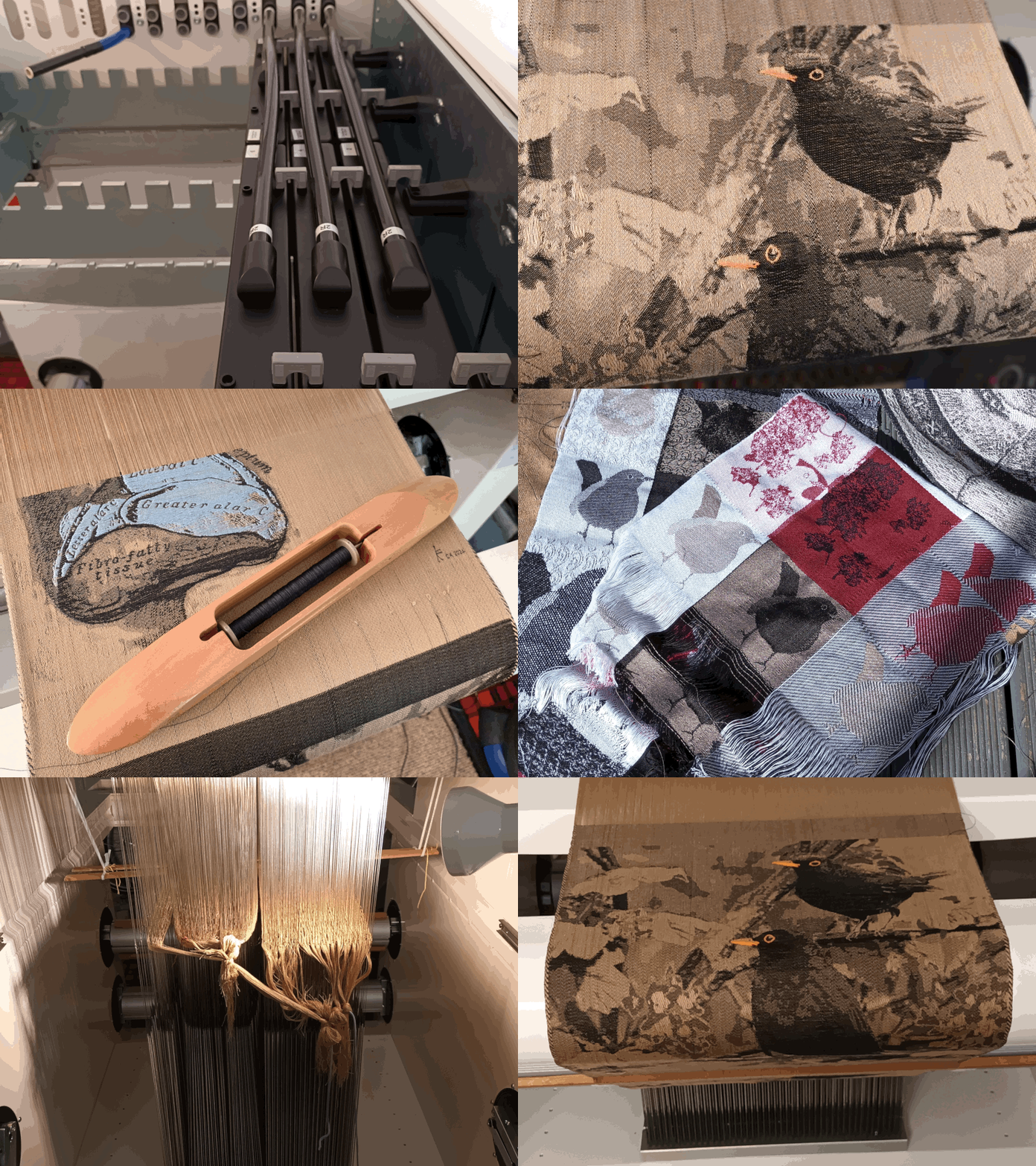
In my film you can see me weaving a unicorn within a tree of life motif from Northern Germany*. My TC2-loom could theoretically weave fabrics like this in a width of 70 cm, but I need to buy two more “MODULES” to realise this. Without getting too technical you could compare this to needing to get a set of specialist brushes for my style of painting or to get a larger canvas.
When I arrived in Dunedin 20 years ago, I was a Jacquard weaver - a weaver of images. Moving to New Zealand, I lost access to this technique.
Weaving is the crossing of threads and one of the oldest textile techniques of our human heritage. Historically weaving images has been a very timely and complicated art. Its mechanisation 200 years ago by Joseph Marie Jacquard used punch cards and therefor binary code - thread down - zero - thread up -one and lead historically to the invention of the computer.
30 years ago, the development of the TC2 Loom, the most modern digital hand loom in the world, was started by Norwegian Vibeke Vestby. Her invention superseded the Jacquard machine. After experimenting a year or so with this new to me tool, I now know what I need for my setup. I am asking you to help me bring this art form at its finest to the South Island and to establish the TC2LoomLab in the coolest small city in the South.
I would be very thankful for any support, huge or small. Thank you so much!
*By the way - The unicorn piece is a quick sketch, not for commercial use. The historic fabric is still woven today in Museumsweberei Meldorf in a technique called Beiderwand and has been researched by Lucia Schwalenberg. I just was fascinated by these patterns as a child already, they are part of my textile heritage.
The Team
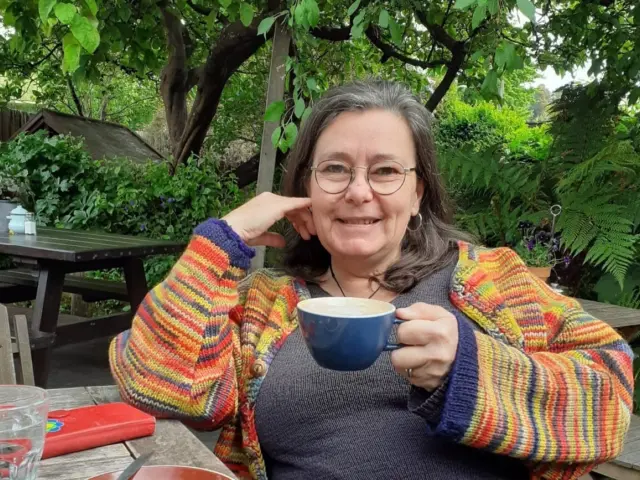
German born New Zealand based artist Christine Keller positions her work between craft, textile design, and art, digital media and innovation. She is interested in the clash of tradition and new technologies, and its social and political implications on communities and individuals. In recent years, people and the environment and the consequences for a future in times of climate change have become the focus of her action and production. She has taught and exhibited internationally around the world since 1994 and has won multiple awards in craft, textile design and art alike. Her work is in public and private collections in Germany and abroad.
After sharing her weaving skills with over 160 individual students at Dunedin's LoomRoom over the last 12 years, she has now decided to reach out to the community to help her finance her research into digital weaving to recharge her own weaving mojo and fulfill her dream of understanding more structures in depth.
Christine's husband, Dunedin born Samuel Patrick, is a retired service technician who has installed and maintained radio communication networks for 15 years before repairing Dunedin's photocopiers for 23 years. He supports Christine's endeavors since they met in 2013. The LoomRoom had a chance to grow to what it is today with his backing.
Without his professional background Christine might not have dared to take on the second hand electronic loom.
For the making of the campaign film Christine engaged her friends:
Karthic is an award-winning filmmaker and podcast producer based in Dunedin, New Zealand, focusing on stories that connect people and nature.
Harshi is an architect, designer and artist based in Dunedin, New Zealand. She runs a successful design studio creating handcrafted gifts and notebooks. She is currently pursuing a Masters degree in Planning at the University of Otago.
The Funding
- The main thing is, I wish to buy some extra parts for my TC2 loom. This will cost NZ$8000. You would help me to buy two modules or "440 pixels more" for my dream resolution.
- Karthic and Harshi will get a fee for helping me with the video for this campaign. I like to create quality, and video production is not part of my core skill set. It suits me to spend money on people - I need them, and they need a share of the cake.
- Boosted is taking its share of the money so they can offer this service to other artists sustainably. I am thankful that there is a platform like boosted for artists like me. I am receiving assistance and feel this is money well spent.
- The rest goes toward my training. It has been 17 years since I last worked in Jacquard Weaving. Now I want to learn again to become GOOD - no - EXCELLENT. This might mean to pay for tuition with a colleague, buy some suitable software or just spend TIME - LOTS OF IT with learning. Your donation will help fund me.
The Details
Most weavers will know that they have a preference to weave with a specific kind of material. It might be cotton, wool or silk, matte or shiny, thick or thin, natural or synthetic... I love to work with fine yarn. When I lived in the North, it was mainly cotton, but in NZ wool is also on the menu. To get a specific size of work, one needs a specific number of threads to be able to weave imagery or pattern with a degree of detail. The loom has segments called "modules" with particular numbers (220😊) of threads and I wish to obtain two more modules for my dream setup.
I have several plans what I would like to do next :
· I want to research into a weave technique called “multiple wefts” and into brocades.
· After already working with glow in the dark and retroreflective materials I wish next to go into the fluorescence to develop wall hangings with the subject of Aurora Australis.
· I will weave digitally woven scarves and stoles with natural materials.
· I will experiment with natural fibers which are dyed sustainably with natural dyes.
· I will be able to accept commissions.
· I will be able to collaborate with other artists.
· My students will benefit from my development as they will be kept up to date with my work and will be able to see samples and visit me at the loom.
You might wonder - why is it so expensive? - You should know that every individual thread miraculously has its own miniature valve, piston, electromagnet and finely balanced spring. The threads are then sucked up by vacuum pump. All this happens, so I can then weave by hand. I think this is an amazing mix of hand work and modern technology.
I love weaving with low tech looms as well but - I have dreamed of this opportunity for a very long time.
The Impact
While I am part of a lively international Jacquard Weaving Community, there are only a handful of practitioners and three TC2 looms in Aotearoa now. The other two looms are in Northland and at Massey University in Wellington. You will help support this art form entering our culture.
By supporting me as an artist with eleven years professional training and ten years paid employment in the field, you will contribute to the development of loom weaving digital innovations in Aotearoa/New Zealand. Based in the South Island, I am keen to extend my digital practices and contribute to the growth of digital weaving in this part of the country. Your generosity will help me achieve this goal.
The tradition of loom weaving in this country is based on wool production. Future work with wool and other locally grown fibers could be strengthened through its ability for prototyping and commissions. Internationally art works and textiles for architecture are done as well as custom productions for film or theater. I could help with the establishment of the TC2 LoomLab in Otepori/Dunedin to produce items like this locally.
Lastly I am certain that all that I will learn will have a flow on effect towards my LoomRoom community and other colleagues. You will hear and see what I am doing and this will be cross inspiration for all.
Thank you for your support!!!
Other Content You May Be Interested In
We Write
Great Emails
Don't miss out on the arts and creativity in Aotearoa — have the latest news delivered to your inbox

We Write
Great Emails
Meet Our Partners
Principal Partner

Lead Partner

Creative Partner



Arts Business Club

Product Partner








Engagement Partner


Boosted Partner


